A clean kitchen can still feel chaotic when sprays, sponges, gloves, and brushes have no assigned homes. Learning how to keep kitchen cleaning supplies organized makes daily chores faster, safer, and less frustrating. It also prevents duplicate purchases and forgotten products beneath the sink.
Cleaning expert Becky Rapinchuk, founder of Clean Mama, shares a practical principle: “The best way to clean is to clean as you go.” That idea also supports organization. Store frequently used items near the sink, but keep heavier bottles low and stable. Use a small caddy for daily essentials, such as dish soap, microfiber cloths, and a scrub brush. Place rarely used products on a higher shelf, clearly labeled and separated from food.
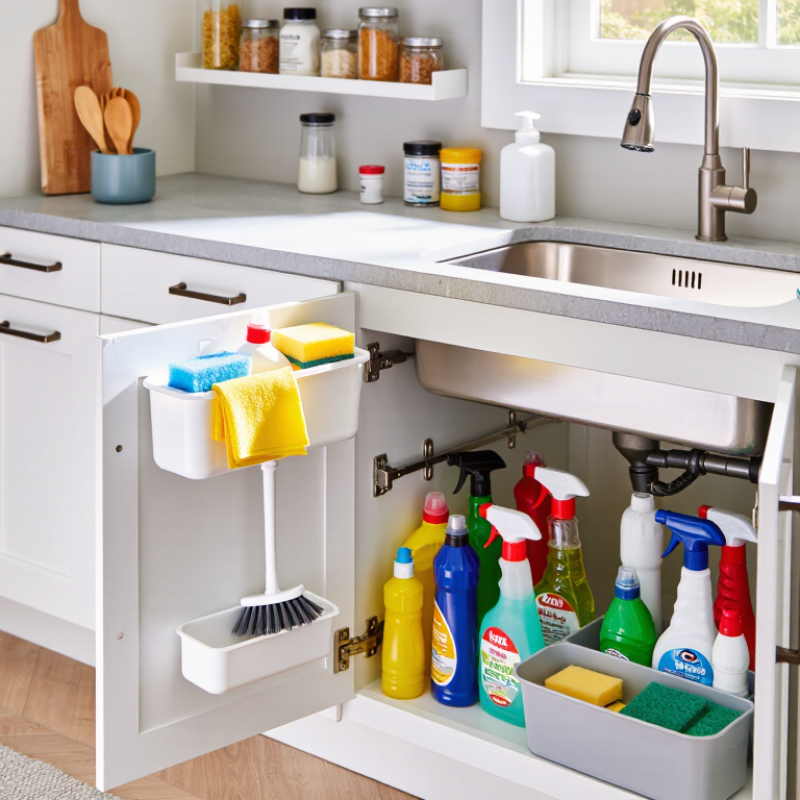
Small details matter. A tension rod can hold spray bottles inside a cabinet. A shallow bin can contain leaking bottles and spare sponges. Let brushes dry before storing them, or unpleasant odors may develop. Keep products in their original containers, and follow each label’s storage instructions. Never mix cleaning chemicals. Some combinations can create dangerous fumes.
Perfect organization is not realistic. I sometimes return a bottle to the wrong shelf when cleaning quickly. That is useful feedback, not failure. The best system should be simple enough to maintain on a busy evening. These seven practical methods will help create visible order, improve access, and make kitchen cleaning feel more manageable. A few minutes of planning can save many minutes of searching. Your future self will notice.
Audit Products and Expiry Dates Using EPA Safer Choice Criteria
7 Best Ways to Keep Kitchen Cleaning Supplies Organized?
Audit Products and Expiry Dates Using EPA Safer Choice Criteria
A safer cabinet begins with an honest audit. Remove leaking bottles, faded labels, and products with unknown contents. The EPA Safer Choice Standard evaluates ingredients for human health and environmental concerns, not just cleaning performance. Check the Safer Choice label, then read the full ingredient information when available. Certification does not replace storage judgment. Keep products sealed, upright, and away from food, heat, and children. Label it.
Expiry dates require practical evidence. Record the purchase date and the date each container was opened. Discard products that smell unusual, separate permanently, or lose their normal texture. Some cleaners may not show a clear expiration date, so follow the manufacturer’s storage guidance. Do not mix leftover products. That habit is risky and unnecessary. A small tray can hold current supplies, while a separate box stores unopened items.
The U.S. Environmental Protection Agency reports that indoor pollutant levels can be two to five times higher than outdoor levels, with some pollutants much higher. This makes ventilation and product selection important during routine cleaning. Audit shelves every three months. Compare labels against EPA Safer Choice criteria, check damaged packaging, and rotate older products forward. My own weak point is overbuying “just in case” bottles. A written inventory exposes that waste quickly. Keep it visible.
7 Best Ways to Keep Kitchen Cleaning Supplies Organized? — Audit Products and Expiry Dates Using EPA Safer Choice Criteria
Use this checklist when organizing kitchen cleaning supplies. Each category represents a key area considered by the EPA Safer Choice program: ingredient safety, product performance, packaging, environmental impact, fragrance disclosure, product labeling, and responsible storage. A value of 1 means the category should be reviewed during an inventory audit.
Use Vertical Storage to Maximize Cabinet Space and Improve Visibility
Vertical storage can transform a crowded cleaning cabinet into a visible, workable station. A 2024 Houzz U.S. Kitchen Trends Study reported that 76% of renovating homeowners updated their cabinets. That finding matters because cabinet design affects daily access, not only appearance.
Use tall, narrow bins for sprays, cloths, and refill bottles. Store each category at eye level when possible. Add shelf risers to create a second vertical layer. A slim door-mounted rack can hold brushes and gloves without consuming shelf depth. Keep heavier containers low. Place rarely used products higher, but never above unstable stacks. Clear labels help, especially when several bottles look similar. I prefer open-front bins because I can see supplies before buying more. That habit reduces duplicate purchases, although I still occasionally find an unopened sponge pack behind the bottles.
The U.S. Environmental Protection Agency notes that indoor pollutant levels can be two to five times higher than outdoor levels, with some activities producing short-term increases. Good organization supports safer handling. Keep products sealed, separate incompatible cleaners, and follow each label’s storage directions. Never transfer chemicals into food containers. Leave a small gap between stored items and the cabinet wall. It improves visibility and makes leaks easier to notice. A perfect system is unlikely. Test one shelf for a week, then adjust the height, bin size, or category when daily use proves the original plan wrong.
7 Best Ways to Keep Kitchen Cleaning Supplies Organized? - Use Vertical Storage to Maximize Cabinet Space and Improve Visibility
| No. |
Organization Method |
Recommended Vertical Storage |
Estimated Capacity |
Visibility Improvement |
Installation |
Best Use |
| 1 |
Install a narrow pull-out shelf |
Slim vertical pull-out rack beside the sink or cabinet wall |
6–10 bottles |
High |
Moderate |
Frequently used dish soap, sprays, and refill bottles |
| 2 |
Use a two-tier shelf riser |
Stacked riser that creates an upper storage level inside a cabinet |
8–14 items |
High |
None |
Sponges, brushes, dishwasher tablets, and small containers |
| 3 |
Add an over-the-door organizer |
Hanging pockets or wire baskets mounted on the inside of a cabinet door |
5–8 items |
High |
Easy |
Lightweight gloves, cloths, scrub pads, and replacement heads |
| 4 |
Store brushes in a tall utensil holder |
Tall divided container positioned upright on a shelf or countertop |
6–12 tools |
Medium–High |
None |
Bottle brushes, scrub brushes, squeegees, and long-handled tools |
| 5 |
Create a vertical spray-bottle rail |
Tension or mounted rail that supports trigger bottles by their necks |
4–7 bottles |
High |
Easy–Moderate |
Spray cleaners that are used regularly and need quick access |
| 6 |
Use labeled vertical bins |
Tall open bins grouped by purpose, such as dishes, surfaces, or laundry |
10–18 items |
Medium–High |
None |
Backups, cleaning cloths, refill packets, and infrequently used supplies |
| 7 |
Mount a wall-mounted cleaning caddy |
Vertical caddy attached to an interior wall, backsplash, or utility area |
6–10 items |
High |
Easy–Moderate |
A compact daily-use kit that can be lifted out and carried |
Practical organization guideline: Keep frequently used supplies between waist and eye level, place heavier bottles on lower shelves, and store chemical products upright in a cool, dry area away from food.
Label Products and Apply First-In, First-Out Stock Rotation
A tidy kitchen cleaning station starts with a clear labeling system. Label each bottle by purpose, dilution instructions, and opening date. Use large, water-resistant labels that remain readable near a damp sink. Store similar products together, but keep different formulas in separate bins. This reduces guessing during a rushed cleanup and helps prevent accidental misuse. I once placed two nearly identical spray bottles side by side. It slowed me down. Small labels would have prevented that confusion.
Apply first-in, first-out stock rotation whenever you buy refills or replacement supplies. Move older bottles to the front and place newer ones behind them. Mark the purchase month on each item, especially supplies used only occasionally. Check the shelf every few weeks for leaks, hardened caps, or faded directions. A simple front-to-back arrangement keeps older stock visible. It also reveals overbuying. I still purchase refills too early sometimes, so this check remains useful.
Tips:
Keep a small inventory card inside the cabinet. Record the product type, quantity, and oldest opening date. Limit backup stock to one or two units. Leave space between containers for quick inspection. Never transfer a cleaner into an unlabeled container. If a label becomes unclear, replace it immediately instead of relying on memory.
Separate Wet Tools: NSF Found 75% of Sponges Carry Coliform Bacteria
Kitchen cleaning supplies look harmless, but moisture changes the risk. NSF International’s Household Germ Study reported coliform bacteria on 75% of tested kitchen sponges. Yeast and mold were also detected on many samples. A sponge beside the sink is not automatically clean.
Separate wet tools immediately. Keep sponges, dishcloths, and bottle brushes in different ventilated holders. Choose holders with drainage, not sealed cups.
Store dry scrubbers away from damp cloths. Hang cloths fully open after use. Never stack wet items together. Wash reusable cloths regularly, and replace sponges when they smell, crumble, or stay slimy. These simple habits support guidance from the U.S. Department of Agriculture, which recommends frequent cleaning and sanitizing of food-contact surfaces.
Use one container for surface tools and another for floor or bathroom tools. Labeling prevents accidental cross-use. Keep cleaning chemicals in a secure, separate area, away from food and utensils. A weekly supply check also prevents old cloths from quietly returning to service. I still forget sometimes. That is the weak point.
Research does not make every home routine perfect. It makes hidden problems easier to notice. A dry sponge, an open rack, and a clean cloth can reduce unnecessary contamination around meal preparation.
Conclusion
Learning how to keep kitchen cleaning supplies organized begins with a practical review of what you already own. Check each product’s purpose, condition, and expiration or recommended-use date, and choose items that meet recognized safety criteria. Group supplies into cleaning zones based on the kitchen’s main work areas, such as food preparation, dishwashing, and floor care. This makes everyday tasks faster and helps prevent unsuitable products from being stored together.
Make better use of cabinet space by adding vertical shelves, racks, or holders that keep bottles visible and easy to reach. Clear labels can identify each product and its intended use, while a first-in, first-out system helps ensure older supplies are used before newer ones. Wet tools deserve special attention: store sponges, brushes, and cloths separately in a ventilated area so they can dry fully between uses. Replacing damp or worn tools regularly can also support a cleaner, more hygienic kitchen environment.

 NIXA Storage