Top Tips What Is the Best Way to Store Dry Food at Home?

Time:2026-10-16 Author:Liam
0%

When cupboards are crowded, dry food can seem easy to store. In reality, heat, moisture, pests, and careless handling can shorten its useful life. Many households ask, “what is the best way to store dry food at home?” The answer depends on the food, the container, and the room where it stays. This guide introduces practical methods for protecting rice, flour, pasta, beans, cereal, spices, and other pantry staples.

Food safety guidance from trusted public health authorities consistently emphasizes cleanliness, dryness, temperature control, and protection from contamination. Choose sturdy, food-grade containers with tight-fitting lids. Wash and dry them completely before use. Even a small drop of water can encourage mold. Store containers away from ovens, sinks, direct sunlight, and damp floors. A cool, dark pantry is usually safer than a warm kitchen shelf. Label each container with the purchase date or opening date. This simple habit makes older food easier to use first.

I once assumed that an unopened bag needed no extra protection. That assumption was wrong in a humid home. Ants found a tiny opening, and the food spoiled sooner than expected. Storage is not perfect. Containers can crack, labels can fade, and pantries can become warmer than expected. Regular checks still matter. Look for unusual smells, clumping, insects, damaged seals, or changes in color. When something seems unsafe, discard it rather than tasting it. The following tips explain how small, realistic habits can make dry food cleaner, fresher, and easier to manage every day.
Top Tips What Is the Best Way to Store Dry Food at Home?

Understanding the Basics of Dry Food Storage

Top Tips: What Is the Best Way to Store Dry Food at Home?

Understanding the Basics of Dry Food Storage starts with controlling heat, moisture, light, and pests. Choose a cool, dry cupboard away from ovens, sinks, and direct sunlight. A stable room temperature helps protect texture and flavor. Use clean, food-safe containers with tight lids. Glass or sturdy plastic containers work well for flour, rice, pasta, beans, and cereal. Never store food in a damp basement or beside cleaning products.

Label each container with the food name and opening date. This small habit makes older food easier to use first. Check packages for tears, insects, clumps, mold, or unusual smells. When anything seems wrong, discard it. Do not taste questionable food. Dry food is not always safe just because it looks dry. Some products also need refrigeration after opening, so follow the package instructions and trusted food-safety guidance.

I once stored flour in its original paper bag and found a hard, stale layer near the bottom. The cupboard seemed dry, but the bag was not sealed well. That mistake changed my routine. I now buy smaller amounts when possible and inspect stored food every few weeks. It is easy to overfill containers and forget dates. Leave a little space for cleaning and visibility. Reliable storage is less about expensive equipment and more about consistent, careful habits.

Choosing Suitable Containers and Storage Materials

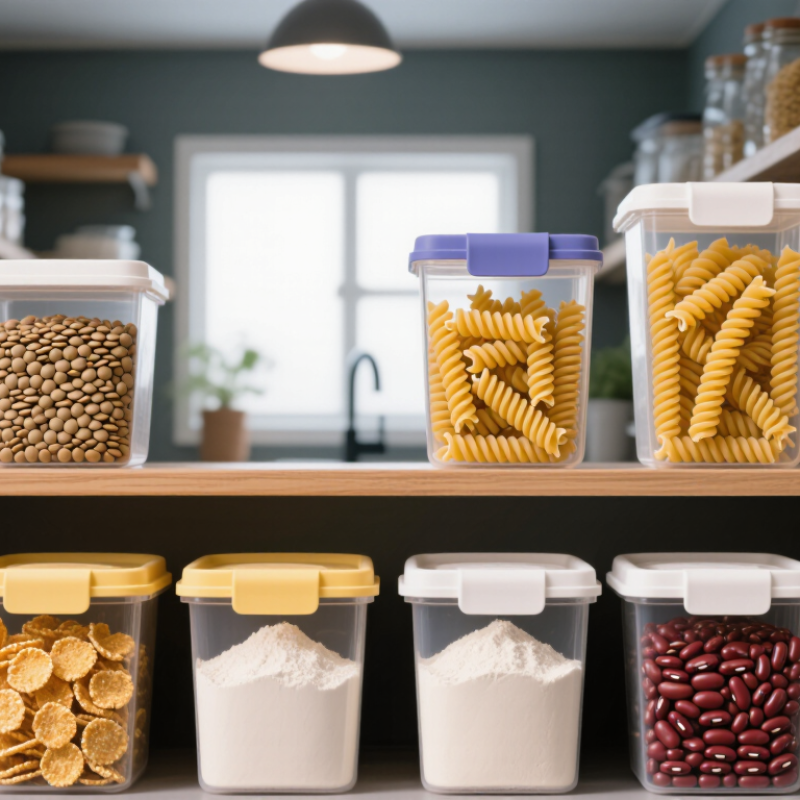
Choosing the right container is the foundation of safe dry-food storage. I prefer clean, food-grade containers with tight-fitting lids. They should block moisture, insects, and household odors. Glass works well for flour, rice, beans, and pasta. It is easy to inspect and does not retain smells. However, glass is heavy and can break on a crowded shelf.

Durable food-safe plastic is lighter and practical for larger quantities. Choose containers marked for food contact, not recycled jars with unknown histories. Metal containers can protect food from light, but they need dry interiors to prevent rust. Airtight seals matter more than appearance. A beautiful container with a loose lid is still a poor choice. I learned this after stored crackers softened overnight.

Keep food away from sinks, ovens, direct sunlight, and damp floors. Use a clean scoop instead of wet hands. Label each container with the food name and storage date. Smaller containers can reduce repeated air exposure, although they may create more washing work. Check seals and corners every few weeks. Tiny cracks are easy to miss. I sometimes overfill containers, which makes lids close badly, so leaving a little space is wiser. Freshly opened packages should be transferred only after checking for insects, unusual smells, or moisture. Shelves should remain cool, dry, and easy to clean.

Preparing Dry Foods for Safe Long-Term Storage

Preparing dry foods for long-term storage begins with moisture control. I store rice, beans, flour, and pasta in clean, airtight containers, not opened bags. A cool, dark cupboard is better than a garage. Heat speeds quality loss, while humidity encourages mold and insects. The USDA FoodKeeper guide lists dry pasta for roughly one to two years, but storage conditions can shorten that period. Dates are clues, not guarantees.

Check every package before transferring it. Reject food with damp patches, webbing, insects, unusual odors, or swollen packaging. Label each container with the purchase date and use older supplies first. I also inspect stored food monthly. This habit feels excessive, yet one overlooked spill can attract pests quickly. Keep containers away from chemicals, sinks, and direct sunlight. FDA Food Code 2022 advises storing food in clean, dry areas, protected from contamination, and at least 15 centimeters above the floor.

For extended storage, choose foods with low moisture and intact packaging. Oxygen absorbers may help with suitable dry products, but they require careful use and correct container sizes. They are not a substitute for dry food. The National Center for Home Food Preservation warns that whole-grain flours and brown rice lose quality faster than refined products because their natural oils can become rancid. Rotate realistically. Storing more than your household can use creates waste, not security.

Organizing Stored Food by Location, Type, and Date

In my pantry, location matters as much as the container. I keep daily staples at eye level, where labels are easy to read. Heavier sacks stay on lower shelves, never above shoulder height. A cool, dry cupboard works better than a garage with wide temperature swings. Keep food away from sinks, ovens, and direct sunlight. Small detail, big difference. I once stored flour near a kettle, and moisture caused hard lumps.

Group food by type, not by package shape. Put grains together, then pasta, baking ingredients, beans, snacks, and emergency supplies. Use clear, sealed containers for opened food, and write the food name on each lid. Different foods can carry different storage risks, so separate strong odors from delicate items such as tea or dried fruit. Leave space between containers for cleaning and inspection. I prefer a narrow shelf for opened packages. It prevents half-used bags from disappearing.

Date every purchase and mark the opening date when practical. Move older food forward and place newer items behind it. This simple rotation system reduces waste, but it is not foolproof. I sometimes forget to update a date after transferring food. A monthly check catches stale smells, insects, damaged seals, and clumped ingredients. Discard anything questionable rather than tasting it. Check package instructions too, because shelf life varies with moisture, fat, and processing. Keep a small list on the cupboard door, but revise it when supplies change.

Checking, Rotating, and Replacing Dry Food Supplies

Top Tips: What Is the Best Way to Store Dry Food at Home?

Checking, Rotating, and Replacing Dry Food Supplies

A reliable pantry starts with frequent checking, not bulk buying. I inspect rice, flour, beans, cereal, and powdered milk every month. Look for insects, dampness, torn packaging, unusual odors, or clumping. Small leaks can hide behind containers. USDA FoodKeeper guidance recommends storing dry foods in cool, dry, dark conditions for better quality. I use airtight containers and keep them away from ovens, sinks, and direct sunlight.

Tips: Write the purchase date on every container. Place older food at the front. Use clean, dry scoops. Never mix a new package with older leftovers. My own weak spot is overestimating how quickly my household eats flour. Smaller containers would have prevented waste. Rotation works best when the shelf reflects real eating habits, not imagined emergencies.

Replacing supplies requires judgment. A “best by” date often describes quality, not automatic spoilage, but damaged or pest-contaminated food should be discarded. USDA guidance shows that storage life varies by product and conditions, so one universal deadline is unreliable. The 2024 UNEP Food Waste Index Report estimated that households generated 60% of global food waste in 2022. That makes careful replacement practical, not merely tidy. Keep a simple inventory on paper or your phone. Review it before shopping. Replace staples after noticeable texture, odor, or flavor changes, even when the date looks acceptable.

Top Tips: What Is the Best Way to Store Dry Food at Home?

Use a first-in, first-out system: check dry-food supplies monthly, place older packages at the front, and replace items when they pass their typical best-quality window or show moisture, insects, damage, or an off odor.

Note: These are typical pantry storage periods for unopened dry foods stored in a cool, dry place. They indicate best quality rather than a guaranteed safety limit. Always follow the package date and storage instructions.

FAQS

What containers are best for storing dry food at home?

Use clean, food-safe containers with tight-fitting lids. Glass suits rice, flour, beans, and pasta because it reveals moisture or insects. It is heavy and breakable. Durable food-safe plastic works better for larger quantities.

Why do airtight seals matter?

Tight seals block moisture, insects, and household odors. Appearance matters less than function. A loose lid can soften crackers overnight. Check corners and seals regularly.

Where should dry food be stored?

Choose a cool, dry, dark cupboard. Keep food away from sinks, ovens, sunlight, and damp floors. A garage may experience large temperature changes. Shelves should remain easy to clean.

How should pantry shelves be organized?

Keep daily staples at eye level for quick reading. Store heavy sacks on lower shelves. Group grains, pasta, beans, baking ingredients, snacks, and supplies separately. Leave small gaps for cleaning and inspection.

How can I reduce food waste through rotation?

Write the purchase date on each container. Mark the opening date when practical. Move older food forward and place newer items behind it. Rotation helps, but I sometimes forget to update labels.

How often should dry food be checked?

Inspect rice, flour, beans, cereal, and powdered milk monthly. Look for insects, dampness, torn packaging, unusual odors, and clumping. Small leaks can hide behind containers. Monthly checks are simple, not perfect.

Should new food be mixed with older leftovers?

No. Keep new packages separate from older food. Check the new package for insects, moisture, strange smells, or damage first. Mixing can hide older food and confuse dates.

When should dry food be discarded?

Discard food with pests, moisture damage, torn packaging, or unusual odors. Do not taste questionable food. A “best by” date often concerns quality, not automatic spoilage. Still, texture and smell deserve attention.

What small habits improve dry-food storage?

Use a clean, dry scoop instead of wet hands. Leave space so lids close fully. Smaller containers limit repeated air exposure, but they create more washing. I sometimes overfill containers, which is a preventable mistake.

Conclusion

Learning what is the best way to store dry food at home begins with controlling moisture, heat, light, and pests. Choose clean, airtight, food-safe containers that protect contents from humidity and odors. Before storing, inspect dry foods for damage, remove unnecessary packaging, and ensure everything is completely dry. Label each container with the food name and storage date so supplies remain easy to identify and manage.

For efficient organization, keep foods in a cool, dry, and well-ventilated area away from direct sunlight and household chemicals. Group similar items together and place older supplies where they are easiest to reach. Regularly check containers for moisture, unusual smells, insects, or changes in texture. Use the oldest suitable items first, replace anything questionable, and update your inventory after each check. These simple habits help preserve quality, reduce waste, and maintain a safe, dependable supply of dry food at home.

Liam

Liam

Liam is a dedicated marketing professional with a profound expertise in the industry, where he excels at highlighting the unique advantages of our core products. With a keen understanding of market trends and consumer needs, Liam frequently updates our company’s professional blog, providing......