How to Organize Kitchen Drawers Efficiently Without New Furniture?

Time:2026-05-11 Author:Oliver
0%

Organizing kitchen drawers efficiently can greatly enhance the functionality of your cooking space. According to a survey by the National Kitchen and Bath Association, nearly 70% of homeowners express dissatisfaction with their kitchen organization. Many struggle to find items quickly and end up with cluttered drawers. Understanding how to organize kitchen drawers without buying new furniture not only saves money but can transform your kitchen experience.

Utilizing existing resources is key. You can repurpose containers, trays, and dividers to create an organized system. Small changes can lead to significant improvements. For instance, using a tiered system for spices can save space and make items easy to access. Data from a 2022 organizational study revealed that 60% of participants experienced increased cooking efficiency after reorganizing their kitchen drawers.

However, it’s important to acknowledge that not all methods work for everyone. Some may find that certain organizational tools don't fit their kitchen style or needs. Learning how to organize kitchen drawers without buying new furniture involves trial and error, as you discover what works best. Embracing imperfections in the process can lead to personal insights and an even more satisfying kitchen environment.
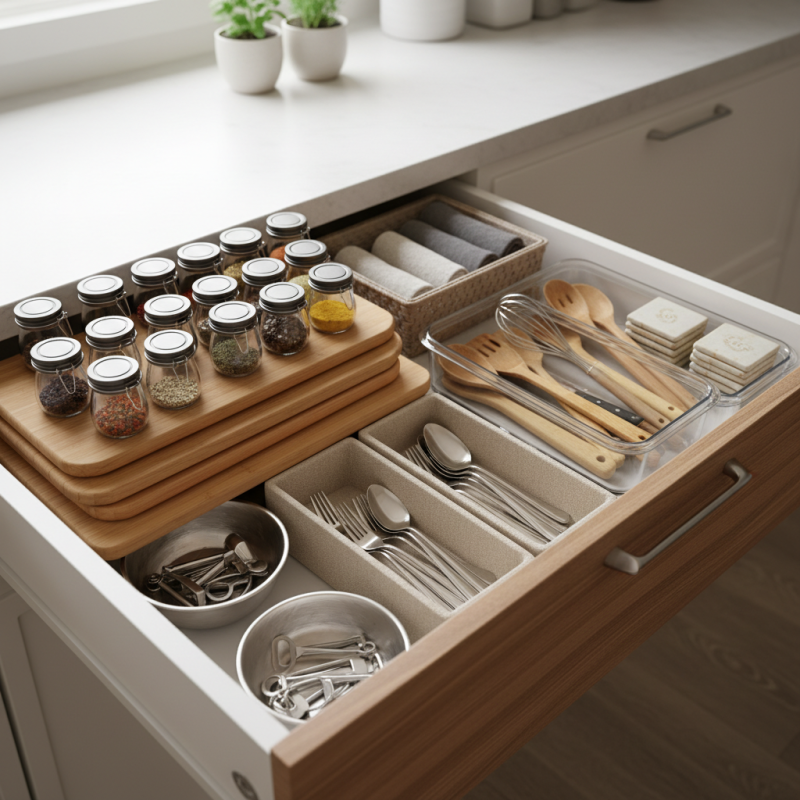
How to Organize Kitchen Drawers Efficiently Without New Furniture?

Understanding Kitchen Drawer Organization Principles

Understanding kitchen drawer organization principles involves assessing how items interact and fit together. Think about the types of utensils you use most frequently. A cluttered drawer can waste precious time during meal prep. Group similar items together, such as spatulas, knives, and measuring cups. This strategy promotes efficiency.

Consider the height and width of the drawers. Shallow drawers can hold lighter items. Deeper drawers are ideal for heavier pots and pans. Avoid over-stuffing drawers. An overflowing drawer can lead to frustration. Regularly refine your contents by removing items you no longer use. This not only creates space but also brings clarity.

Utilizing dividers or small containers can streamline the process. However, don’t rush into purchasing new storage solutions. Reassess what you already have. Sometimes, an old box can become an effective organizer. Reflect on your daily cooking habits. Do you reach for certain gadgets more often? Understanding your behavior will guide your organizing efforts. Remember, a perfect system takes time to develop. It’s a journey of trial and error.

Kitchen Drawer Organization Principles

Assessing Your Current Kitchen Drawer Setup for Efficiency

When assessing your current kitchen drawer setup for efficiency, start by taking inventory. Open each drawer and categorize items: utensils, tools, and gadgets. This will reveal duplicates, unnecessary items, or things that belong elsewhere. According to the Home Organization Research Institute, 30% of people keep items they rarely use. Identifying these can greatly enhance functionality.

Next, evaluate the layout. Are frequently used items easily accessible? A study by the National Kitchen and Bath Association indicates that optimizing drawer organization can save up to 10 minutes daily in meal prep. Consider using drawer dividers or small containers to create sections. Measure your drawers. You might be surprised at how much space you have. It’s often underutilized.

Lastly, seek feedback from family members. They might have insights into what works or doesn’t. Some people may feel that a cluttered drawer is just fine, but a cluttered space can lead to stress. Regularly reassess your drawer contents. Needs change. The kitchen should adapt. Remember, effective organization doesn't always mean drastic changes. Small adjustments can significantly enhance kitchen efficiency.

Utilizing Everyday Items for Drawer Organization Solutions

Kitchen drawers can easily become chaotic zones. However, with a bit of creativity, everyday items can transform them into organized spaces. Instead of rushing out to buy new furniture, think about repurposing what you already own. For instance, an old cupcake liner can hold small items like batteries or paper clips. Just a simple container can make a huge difference.

Consider using shoe boxes to store utensils or other kitchen gadgets. They are easy to label and stack neatly. Additionally, rubber bands can help keep cords or small tools together. This method helps in reducing clutter and finding items faster. You may need to experiment with different solutions, as not every idea will work perfectly.

Over time, you might find that your initial organization methods need adjustment. Drawers may become stuffed again with new items. Regularly reassessing what you have can improve efficiency. Keep an eye on what you use most and which items are seldom touched. Adjusting your system is essential for maintaining order and function in your kitchen.

Implementing the "Zone" Method for Kitchen Item Grouping

Implementing the "Zone" method can transform how you organize your kitchen drawers. This approach focuses on grouping similar items together to streamline your cooking process. Start by identifying the different zones in your kitchen. Common zones include utensils, cooking tools, and baking supplies. Each zone should be easily accessible, reducing the time spent searching for what you need.

Tips: Assess your daily cooking habits. Place frequently used items in the front. Store lesser-used tools towards the back. Consider drawer dividers to maintain order. This will prevent chaos even in the busiest of kitchen moments.

Don't hesitate to reflect on your organization from time to time. Is everything easy to find? Are some items collecting dust? Discard or donate items you no longer use. This can free up precious space in your kitchen. The goal is to create a functional area that enhances your cooking experience and minimizes frustration.

Maintaining Long-term Organization with Regular Evaluations

Maintaining organization in your kitchen drawers requires regular evaluations. This isn't just about tidying up once and forgetting it. You should schedule time every few months to reassess your system. Look for items that no longer serve you or are rarely used. This will keep your kitchen functional and clutter-free.

Here are some tips to enhance your drawer organization:

Evaluate your utensils regularly. If a tool hasn’t been used in a year, consider donating it. Group similar items together. For instance, keep all baking tools in one drawer. This not only saves space but also makes searching easier.

Another strategy is to use small bins or dividers. These can keep your kitchen drawers from becoming chaotic. However, remember that these solutions need evaluation. A poorly designed system can lead to frustration. Regularly check if your organizers still meet your needs. This reflects your cooking habits and makes life smoother.

FAQS

: How can I start organizing my kitchen drawers?

: Begin by assessing your current drawer contents. Categorize items to identify duplicates and unnecessary tools.

What types of items should I group together in drawers?

Group similar utensils like spatulas, knives, and measuring cups. This promotes efficiency during meal prep.

How often should I evaluate my kitchen drawer organization?

Schedule evaluations every few months. Regular reassessment keeps your kitchen functional and reduces clutter.

What should I do with items I no longer use?

Consider donating unused tools or items that haven’t been used in a year. This creates space and clarity.

Are there specific ways to maximize drawer space?

Use dividers or small containers to create sections within the drawers. This helps utilize space effectively.

What role does drawer height play in organizing?

Shallow drawers should hold lighter items, while deeper ones are better for heavier pots and pans.

How can I make my kitchen organization reflect my habits?

Reflect on your daily cooking routines. Organize based on frequently used items for better accessibility.

what if family members have different opinions about drawer organization?

Seek feedback from family. Their insights can help create an organization system that works for everyone.

Can small adjustments really make a difference in kitchen efficiency?

Yes, even small changes can enhance efficiency. Regularly review your organization to align with your evolving needs.

How can I avoid frustration with my drawer organization system?

Regularly check if organizers still meet your needs. A poorly designed system can create chaos in your kitchen.

Conclusion

This article provides practical guidance on how to organize kitchen drawers without buying new furniture. It begins by outlining essential principles of kitchen drawer organization, empowering readers to assess their current setups for efficiency. By utilizing everyday items, such as dividers and containers that are already at home, individuals can creatively enhance their drawer space.

The article also introduces the "Zone" method, which encourages grouping similar items together to streamline access and efficiency. Finally, it emphasizes the importance of maintaining organization through regular evaluations, ensuring that the system remains functional over time. With these strategies, anyone can achieve an organized kitchen without the need for additional purchases.

Oliver

Oliver

Oliver is a seasoned marketing professional with a wealth of expertise in driving brand awareness and engagement. With a deep understanding of our company's product offerings, he consistently delivers high-quality content that enriches our professional blog. His insights not only shed light on......