How to Organize Kitchen Utensils Effectively?

Time:2026-09-16 Author:Sophia
0%

A well-organized kitchen saves time, reduces clutter, and makes daily cooking feel less tiring. Learning how to organize kitchen utensils effectively begins with observing your actual habits. Notice which tools you reach for every morning, and which ones remain untouched for months. A wooden spoon near the stove makes sense. A pastry brush buried beneath serving forks does not.

Professional organizing consultant Marie Kondo offers a useful perspective: “The objective of cleaning is not just to clean, but to feel happiness living within that environment.” Her principle applies well to kitchen storage. Organization should support real movement, not create a showroom that collapses after one busy dinner. Keep frequently used utensils between waist and shoulder height. Store knives safely in a block or drawer insert. Place measuring spoons near dry ingredients, and group tools by task rather than appearance.

This guide explores practical methods for drawers, countertops, cabinets, and small kitchens. It considers visibility, accessibility, safety, and wasted space. A narrow container can hold spatulas upright beside the cooktop. Dividers can stop tongs from crossing into every corner. Labels may help, although too many labels can become another burden.

Perfection is unlikely.

A system may work beautifully for one week, then fail during holiday cooking. That failure offers useful information. Reconsider the layout, remove duplicates, and keep only tools that support your routines. Effective organization is not a one-time transformation. It is a flexible practice that improves through honest observation and small adjustments.
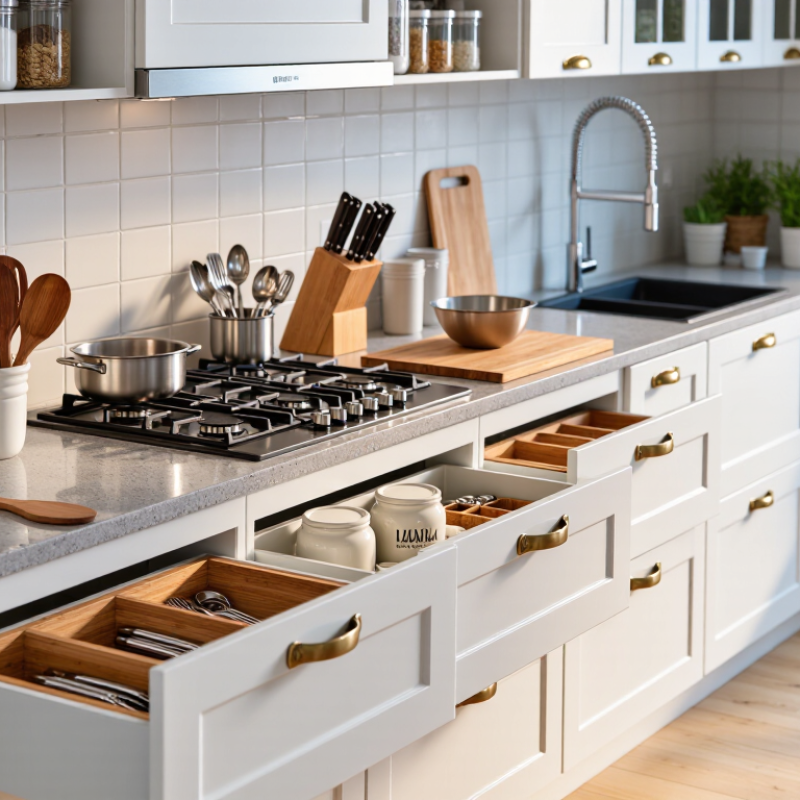
How to Organize Kitchen Utensils Effectively?

Assess Your Kitchen Utensils and Available Storage Space

Before organizing kitchen utensils, measure what you own and where it can realistically go. Empty every drawer, cabinet, crock, and countertop container. Group similar tools together, such as peelers, spatulas, whisks, and measuring spoons. Discard duplicates only after checking their condition and frequency of use. A utensil used weekly should not compete with one used daily.

Measure drawer depth, cabinet height, shelf clearance, and the distance from storage to the preparation area. Record obstacles too, including hinges, plumbing, and uneven walls.

The 2024 U.S. Houzz Kitchen Trends Study reports that 76% of renovating homeowners upgraded cabinets, showing how strongly storage affects kitchen planning.

However, new cabinets cannot fix poor inventory decisions. More space may simply hide excess utensils.

Use the easiest locations for your most-used tools. Keep cooking utensils near the primary work surface, knives in a secure designated holder, and seasonal items higher or farther away. Leave roughly 20% of each storage zone empty for movement and future needs. This is not a strict industry rule, but it prevents drawers from becoming jammed.

I once measured cabinet width but forgot the drawer slides. The organizer did not fit. Measure the usable interior, not the exterior. Recheck your assumptions. A simple sketch, photographed before shopping, can prevent expensive mistakes.

Sort Utensils by Function, Frequency, and Size

Organizing kitchen utensils becomes easier when each tool has a clear purpose. Group spatulas, tongs, and serving spoons together near the cooking area. Keep peelers, graters, and measuring tools in a separate preparation section. This arrangement reduces searching and keeps related tasks together. From my own kitchen experience, function-based storage saves more time than attractive but random displays.

Frequency should guide placement. Put daily tools in the front drawer or a container beside the stove. Store occasional baking tools higher or farther away. Size matters too. Place long utensils in a tall holder, while small tools need divided compartments. Heavy items should stay in sturdy, low drawers. Otherwise, smaller tools may disappear underneath them. I still find one forgotten whisk sometimes. That shows the system needs regular adjustment.

Tips: Review your utensil storage every few months. Remove duplicates and damaged tools before reorganizing. Use simple dividers to prevent rolling and mixing. Leave a little empty space for comfortable access. Labeling can help, but it may feel unnecessary in a small kitchen. Test the arrangement while preparing a real meal, not just while cleaning. Cheerful order is useful, but practical movement matters more.

Assign Practical Storage Zones for Everyday Tasks

How to Organize Kitchen Utensils Effectively?

Assign storage zones around everyday tasks, not utensil types alone. The 2024 Houzz U.S. Kitchen Trends Study reports that 76% of renovating homeowners upgraded cabinetry. That investment works better when each cabinet has a clear purpose. Store knives, peelers, and cutting boards beside the main preparation surface. Keep spatulas, tongs, and ladles within one arm’s reach of the cooktop. Place measuring cups near dry ingredients. Small dividers prevent them from becoming a noisy drawer pile.

Cleaning tools need their own zone near the sink. Keep scrubbers, cloths, and brushes in a ventilated container, away from food-contact utensils. The U.S. Bureau of Labor Statistics’ 2023 American Time Use Survey shows Americans spend about 40 minutes daily on food preparation and cleanup. Shorter reaches can reduce repeated movement during that routine. It sounds minor. It adds up.

I once stored serving spoons beside cooking tools, assuming convenience would improve. It did not. Guests opened three drawers before finding them. A better arrangement keeps frequently shared utensils in one accessible drawer near the dining path. Less-used tools can move higher or farther away. Review the layout after one week, because real cooking exposes mistakes that diagrams miss. Some households may need a different arrangement, especially with limited counter space or shared cooking habits.

Choose Organizers That Improve Access and Save Space

How to Organize Kitchen Utensils Effectively?

A crowded utensil drawer slows cooking and creates unnecessary frustration. I used to pile spatulas, ladles, and peelers together. Finding one tool often meant removing half the drawer. A compartment organizer changed that routine, but only after I measured the drawer carefully. Choose sections that match your actual utensils, not an idealized kitchen. Long tools need deeper spaces, while measuring spoons fit better in narrow compartments.

Access matters as much as storage capacity. Keep daily tools near the main preparation area. Place wooden spoons beside the stove, but keep heat-sensitive handles away from direct burners. A vertical divider can store baking trays and cutting boards upright. This uses height instead of valuable horizontal space.

For limited drawers, shallow trays create separate layers without hiding smaller tools. Pull-out organizers can also improve visibility inside deep cabinets.

Avoid filling every gap. Overpacked sections make even a good organizer frustrating. I still keep a few rarely used tools in a higher cabinet, although I sometimes store them too far away. That choice needs review. Check the setup after a week of cooking. If a tool repeatedly lands on the counter, its storage position probably needs changing.

Smooth, washable materials help maintain cleanliness, especially around tools used with raw food. Stable organizers are also safer because they reduce sliding, tipping, and accidental contact with sharp edges.

Maintain an Efficient Utensil Organization System

An efficient utensil organization system should follow your cooking habits, not a perfect showroom layout. The 2024 U.S. Houzz Kitchen Trends Study reports that 76% of renovating homeowners add specialty storage. This suggests that storage needs careful planning. Place spatulas, tongs, and wooden spoons beside the main cooking zone. Keep knives in a secure drawer insert near the preparation area. Store rarely used tools higher or farther away. Keep it simple.

Measure each drawer before buying organizers. Leave enough space for handles and easy cleaning. The NKBA 2024 Kitchen Design Trends Report identifies storage and organization as important kitchen-planning priorities. A divided drawer can prevent clutter, but excessive compartments may waste usable space. My first system looked neat and still slowed cooking. I had placed measuring spoons too far from the baking area. I changed the layout after observing my movements for one week. Use vertical dividers for baking sheets and shallow trays for small tools. Labeling can help, although labels become unnecessary when locations feel natural. Review the arrangement every few months, especially after adding new utensils. A system must remain practical, washable, and flexible.

How to Organize Kitchen Utensils Effectively?

Maintain an efficient utensil organization system by placing frequently used tools closest to the main preparation area and storing occasional-use items farther away.

This planning guide uses practical storage distances: daily-use utensils within 30 cm, weekly-use utensils within 60 cm, and occasional-use utensils within 120 cm of the primary work area.

FAQS

How should kitchen utensils be organized?

Create storage zones around daily tasks, not utensil categories alone. Keep knives, peelers, and cutting boards near the preparation surface.

Where should cooking utensils go?

Store spatulas, tongs, and wooden spoons within one arm’s reach of the cooktop. Keep handles away from direct heat.

Where should cleaning tools be stored?

Give scrubbers, cloths, and brushes a separate ventilated container near the sink. Keep them away from food-contact utensils.

How can a crowded utensil drawer become easier to use?

Measure the drawer first. Use deep sections for long tools and narrow compartments for measuring spoons.

Are vertical dividers useful in a kitchen?

Yes. They keep baking trays and cutting boards upright, using cabinet height instead of valuable drawer space.

Should every utensil have a dedicated compartment?

Not always. Too many dividers waste space and can make cleaning harder. Leave some room for movement.

How can storage placement be tested?

Observe your cooking for one week. If a tool repeatedly stays on the counter, its storage location may be wrong.

How often should a utensil system be reviewed?

Review it every few months and after buying new tools. A neat system can still slow you down.

What makes utensil organizers practical?

Choose stable, washable materials with enough handle space. Avoid overpacking, especially near sharp tools.

Where should rarely used utensils go?

Place them in higher cabinets or farther storage areas. I sometimes store them too far away, so regular review matters.

Conclusion

Learning how to organize kitchen utensils effectively begins with assessing what you own, how often each item is used, and how much storage space is available. Remove duplicates or rarely used tools, then sort the remaining utensils by function, frequency of use, and size. Group cooking, baking, serving, and preparation tools together so that related items are easy to locate. Keep everyday utensils within quick reach, while placing seasonal or occasional tools in less accessible cabinets or drawers.

Create practical storage zones based on your kitchen’s workflow, such as keeping preparation tools near the counter and cooking utensils close to the stove. Use dividers, containers, hooks, or tiered inserts to separate items, prevent clutter, and make the most of vertical space. Finally, maintain the system by returning each utensil to its assigned place, reviewing unused items regularly, and adjusting the arrangement as your cooking habits change. A simple, consistent organization system can improve efficiency, save space, and make daily kitchen tasks more enjoyable.

Sophia

Sophia

Sophia is a dedicated marketing professional with an exceptional depth of knowledge about her company's products and services. With a keen understanding of market trends and customer needs, she crafts insightful blog posts that not only inform but also engage readers, enriching the company’s online......