Kitchen clutter rarely comes from too many objects alone. It grows when daily tools have no clear, reachable home. A crowded counter, tangled lids, and a drawer that will not close can make cooking feel harder. This guide explores how to reduce clutter in kitchen spaces with practical habits and well-chosen organizers from Chinese suppliers.
Houzz’s 2024 U.S. Kitchen Trends Study reports that 76% of renovating homeowners upgraded their cabinets. The finding points to a lasting priority: storage that fits real routines, not just attractive displays. Organizing consultant Marie Kondo writes, “Keep only those things that speak to your heart. Then take the plunge and discard all the rest.” Her advice suggests a useful order: edit first, measure next, then buy.
That order matters. Start small. Group cookware, food containers, spices, and tools near where each is used. Measure drawer depth, shelf height, and cabinet width before choosing dividers, stackable bins, or pull-out baskets. Chinese kitchen-organizer manufacturers offer many formats, but product quality and dimensions vary. Check materials, load limits, cleaning instructions, and supplier documentation rather than relying on photos alone. Use clear bins for visible pantry stock, and leave space for new groceries. A tidy drawer is not a perfect kitchen. It may still look lived-in, and that is fine. The goal is easier access, safer movement, and less time searching for the lid that always seems to disappear.
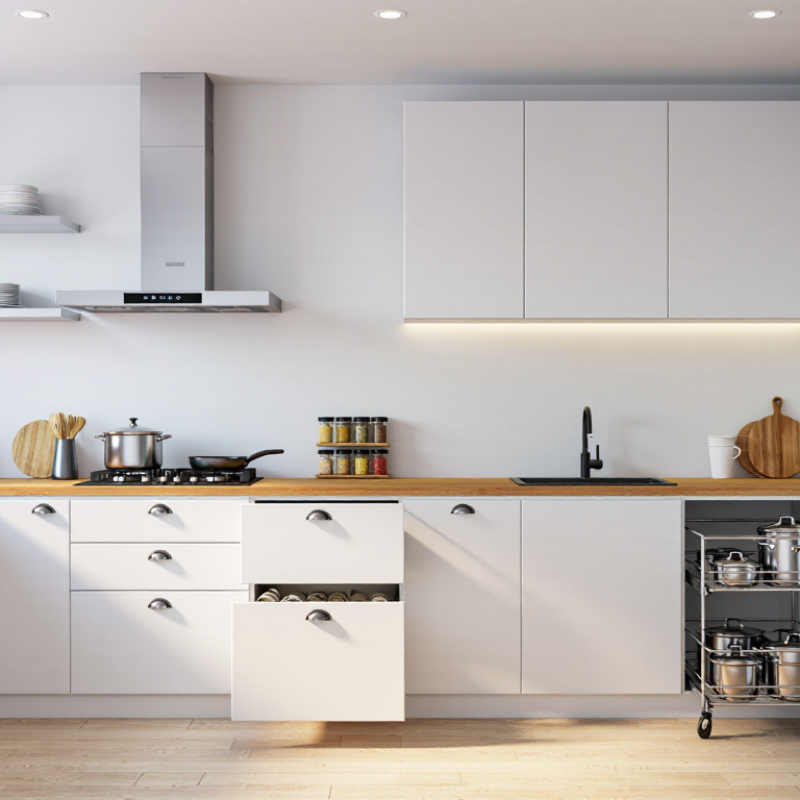
Before buying another bin, watch how the kitchen works for a week. Note what piles up near the kettle, which pans block the cupboard, and where lunch containers lose their lids. These patterns reveal everyday storage needs better than a tidy-looking shelf does. Keep daily dishes within easy reach; move occasional serving pieces higher. I still catch myself storing items by category, not by how often I use them. That habit can waste useful space.
Measure shelves and drawers, then group items by task: breakfast, cooking, packing lunches. Houzz’s 2024 U.S. Kitchen Trends Study surveyed 3,437 homeowners; 76% of renovating respondents upgraded cabinets. That figure describes renovation choices, not clutter levels, but it shows how often storage gets reconsidered during kitchen projects. Before replacing cabinets, check whether adjustable dividers or a shallow tray could solve the actual problem. USDA estimates that 30–40% of the U.S. food supply is wasted, so clear sightlines in the pantry and refrigerator may help households notice food sooner. Small wins count. Still, clear containers are not magic; labels can fade, and oversized organizers may crowd a narrow shelf. Start with the items used every day.
Begin by grouping kitchen items according to how often you use them. Keep everyday plates, mugs, and cooking tools within easy reach. Store holiday china and spare serving dishes higher up or farther back. A simple shelf organizer can separate dinner plates by size and keep stacks from leaning. Leave enough room to lift items without scraping nearby dishes.
Next, sort by type. Put baking supplies together, keep food containers with their lids, and group tea cups near the kettle. Small bins help corral measuring spoons, clips, and loose utensils. Labeling can help, but only if the labels match how your household actually works. I have found that overly detailed categories can become one more thing to maintain. Keep it simple.
Storage needs matter, too. Heavy cookware belongs on sturdy, lower shelves; delicate china needs a stable surface and enough space between pieces. Use drawer dividers for flat tools, and choose stackable containers only when they fit the shelf height. Check for damp spots before storing rarely used items. Some kitchens have awkward corners, and not every organizer will fit neatly. Measure first, then adjust the plan when daily use reveals what you missed.
| Use Category | Items to Group | Typical Use | Storage Requirements | Suitable Organizer | Suggested Location | Practical Tip |
|---|---|---|---|---|---|---|
| Daily cooking | Cooking spoons, spatulas, tongs, ladles | Used frequently at the stove | Keep within reach; allow utensils to dry fully before storing | Utensil crock or divided drawer tray | Countertop near the cooking area or a nearby drawer | Keep only regularly used tools in the main cooking zone. |
| Food preparation | Cutting boards, knives, peelers, measuring tools | Used for chopping, measuring, and prepping ingredients | Store knives securely; keep boards upright so they can air-dry | Knife block or drawer insert; vertical board rack | Prep counter or cabinet close to the main work surface | Separate sharp tools from loose items to make them easier and safer to retrieve. |
| Baking | Mixing bowls, measuring cups, baking pans, rolling pin | Used for baking and occasional batch cooking | Stack compatible bowls and pans; protect delicate pieces from heavy items | Adjustable shelf riser or vertical pan divider | Cabinet or shelf near the oven | Store pans vertically where possible to avoid unstacking a pile to reach one. |
| Dry pantry staples | Rice, pasta, flour, cereal, dried beans | Used for everyday meals and snacks | Keep in a cool, dry place; use airtight containers for opened packages | Clear, food-safe airtight containers or labeled bins | Pantry shelf or a dry cabinet away from heat | Group similar foods together and label containers with the food name. |
| Spices and seasonings | Ground spices, dried herbs, salt, pepper, seasoning blends | Added during cooking or at the table | Store tightly closed in a cool, dry place away from direct heat and sunlight | Tiered shelf insert, shallow drawer tray, or compact rack | Pantry or cabinet near the prep area, but not directly above the stove | Arrange labels so they can be read without moving other containers. |
| Food storage | Reusable containers, lids, wraps, food-storage bags | Used for leftovers and packed meals | Keep containers clean and dry; store lids with matching container sizes | Container stack with a lid organizer or divided bin | Cabinet or drawer near the refrigerator | Nest containers by shape and store lids upright for quicker matching. |
| Cleaning supplies | Dish soap, sponges, brushes, dishwasher tablets | Used for washing dishes and wiping surfaces | Keep products contained and away from food; follow product label directions | Sink caddy or a dedicated lidded bin | Under the sink or beside the sink, with safe separation from food items | Store chemicals out of reach of children and pets, and keep them in their original containers. |
| Tableware | Everyday plates, bowls, mugs, drinking glasses | Used for daily meals and drinks | Keep heavier pieces on lower shelves; avoid unstable stacks | Plate rack, shelf riser, or padded drawer divider | Cabinet near the dining area or dishwasher | Place the most frequently used pieces at an easy-to-reach height. |
| Small appliances | Blender, toaster, hand mixer, food processor | Used regularly or for specific meal-preparation tasks | Allow appliances to cool before storing; keep cords tidy and ventilation openings clear | Appliance garage, sturdy shelf, or designated cabinet zone | Countertop for daily-use appliances; cabinet for occasional-use appliances | Store accessories together with the appliance they belong to. |
| Occasional-use items | Serving platters, specialty gadgets, seasonal bakeware | Used for gatherings, holidays, or occasional recipes | Keep clean and dry; protect fragile items and avoid overloading high shelves | Labeled storage bin or padded shelf divider | Higher cabinet shelf or a less-accessible storage area | Review this zone periodically and keep only items that are still useful. |
How to Reduce Kitchen Clutter with China Top Organizers
A well-organized kitchen starts with matching each organizer to its storage space. Measure cabinet width, depth, and height before buying anything. A narrow pull-out rack can use the gap beside a sink, while a two-tier shelf keeps plates visible in a crowded cabinet. Choose sturdy metal or durable plastic, especially for heavy cookware. Measure twice.
Drawers need organizers that prevent movement. Adjustable dividers separate knives, cooking tools, and measuring spoons without wasting valuable space. For deep drawers, use low trays so items remain easy to reach. Avoid filling every section immediately. Leave a little room for larger utensils and future changes.
Countertops require a different approach. A vertical holder can store cutting boards, trays, or baking sheets beside the oven. Small bins can group tea, seasoning packets, or frequently used tools. Keep daily items visible, but move rarely used appliances into cabinets. I once placed a large rack near the sink, and it collected water spots quickly. The placement looked practical, but it was not. Check drainage, cleaning needs, and surface stability before settling on one design. A non-slip base helps, though it may still need occasional adjustment.
A tidy kitchen starts with zones, not with buying more containers. I learned this after stacking plates beside baking trays. The arrangement looked neat, yet daily use became awkward. Now I divide shelves by purpose: breakfast, cooking, serving, and cleaning. Each zone keeps similar items together and limits unnecessary movement.
Keep frequently used dishes between waist and eye level. Store heavy cookware on lower shelves. Place delicate china in a quiet, protected area. Felt separators or adjustable dividers can reduce chips and scratches.
For china organizers, measure the shelf before choosing a rack. Check its width, height, load capacity, and ventilation. A vertical plate holder can turn a crowded stack into an easy-access row. Cup hooks may free shelf space, but they need secure mounting. I keep everyday bowls near the sink and serving pieces close to the dining area. This small connection saves steps during meals. Do not force every item into a zone. Leave a little empty space.
Labels help when several people share the kitchen, especially inside deep cabinets. Use plain words such as “daily plates” or “baking tools.” Review each zone after one week. If an item remains in the wrong place, the system may be wrong, not the user.
I once placed glasses above the refrigerator and rarely returned them there. Moving them beside the water filter worked better. Organizing is practical, but it is also a test of real habits.
How to Reduce Kitchen Clutter with China Top Organizers
Maintain an Orderly Kitchen with Regular Reviews and Adjustments
A well-designed organizer cannot fix a kitchen that nobody reviews. In my experience, clutter returns when containers outlive their purpose. Every four weeks, empty one drawer and inspect its contents. Keep daily tools near the preparation area. Move rarely used items higher or farther back. Chinese-made organizers can offer practical options, including adjustable racks, pull-out baskets, and stackable shelves. Choose materials that resist moisture and support the stated load. Measure cabinet depth before ordering. I have made that mistake before.
Regular reviews also reduce unnecessary food purchases. The United Nations Environment Programme’s Food Waste Index Report 2024 estimates that households generated 631 million tonnes of food waste in 2022. A visible, orderly pantry makes forgotten ingredients easier to notice. Use clear labels with purchase dates. Place older packages in front. Review them weekly. Short checks work best.
Adjust the system when habits change. A growing family may need larger bins. Someone cooking less may need fewer countertop tools. The U.S. Department of Agriculture estimates that 30% to 40% of the food supply is wasted. Better storage cannot solve every cause, but it can improve visibility and access. Remove one unused item during each review. Keep a small “relocate” box nearby. Some adjustments will fail. That is useful information, not a personal failure.
Suggested review cycles help maintain an orderly kitchen by identifying unused, misplaced, or overcrowded items before clutter builds up.
Use shorter review intervals for high-use or frequently changing areas such as pantry bins and under-sink storage. Review cabinet risers and turntables less often, while adjusting the schedule whenever storage needs change.
Observe the kitchen for a week. Note where pans block shelves, lids go missing, or items gather beside the kettle. Daily habits reveal more than a perfectly arranged shelf.
Not always. Measure shelves and drawers first. Adjustable dividers or a shallow tray may solve the problem without major changes.
Keep daily plates and mugs within easy reach. Store holiday china and spare serving dishes higher or farther back, on a stable shelf.
Sort items by task and type. Keep baking supplies together, pair containers with lids, and place tea cups near the kettle. Simple groups are easier to maintain.
Measure cabinet width, depth, and height. Check the shelf height, too. An organizer that is slightly too large can crowd a narrow space.
Use adjustable dividers for flat tools and low trays in deep drawers. Leave some room for larger utensils. A completely filled drawer may become awkward.
Keep frequently used tools visible and move rarely used appliances into cabinets. A vertical holder can store cutting boards beside the oven.
Put heavy pots and pans on sturdy, lower shelves. Delicate dishes need stable surfaces and space between pieces.
Not necessarily. Clear containers may make food easier to see, but labels can fade. Oversized organizers can also take up too much room.
Water spots may collect underneath or around it. Check drainage, cleaning needs, and surface stability. Even a non-slip base may need adjusting.
Learning how to reduce clutter in kitchen spaces begins with assessing where mess accumulates and identifying your everyday storage needs. Start by sorting kitchen items according to frequency of use, category, size, and storage requirements. Frequently used tools should remain within easy reach, while seasonal or rarely used items can be placed in less accessible areas. This process helps create a clear plan before selecting organizers for cabinets, drawers, shelves, and countertops.
Choose practical organizers that match the available space and keep similar items together. Divide the kitchen into functional zones, such as food preparation, cooking, baking, cleaning, and serving, so each item has a logical home. Use drawer dividers, shelf risers, containers, and countertop holders to improve visibility and maximize storage. Finally, maintain order by reviewing your kitchen regularly, removing unused items, adjusting storage solutions, and returning everything to its designated place after use.

NIXA Storage